

 By Serah Bernard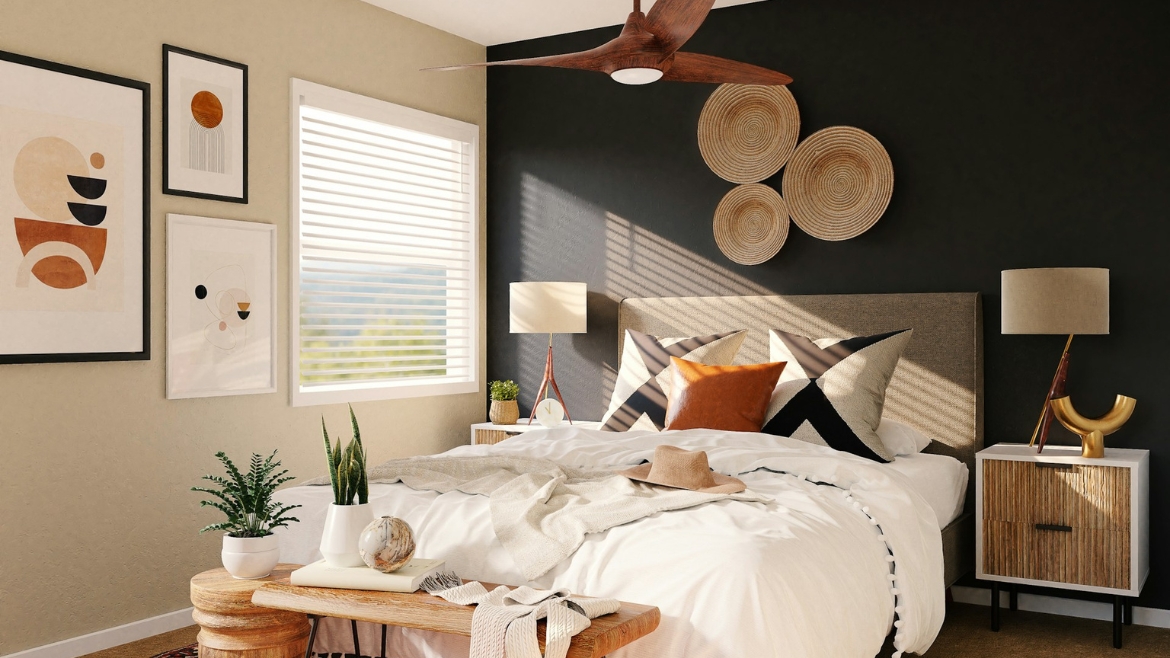
Small bedrooms get a bad reputation. And honestly, a lot of it is deserved, but not because of the size. It's because of what people do with their size.
Too much furniture. Too many competing focal points.
Storage solutions that solve one problem and create three more. The truth is, a small bedroom can feel just as intentional, just as comfortable, and just as personal as a large one.
It just requires a different approach. Not less, more deliberate. Every piece of furniture has to earn its place. Every corner has to work.
And once you get that right, small stops feeling like a limitation and starts feeling like a design choice.
Here are 25 small bedroom ideas that actually work.
A Quick Note Before You Start
Before any of the ideas below, one principle worth holding onto: Essentials first. Everything else is a bonus.
A bedroom needs a bed and somewhere to store clothes. That's genuinely it. Everything else, the desk, the accent chair, the third nightstand, is optional.
Starting from that place makes every decision easier and every square foot more intentional.
Small Bedroom Ideas
Furniture and Layout
1. Choose a Bed Frame With Legs
The single most impactful furniture decision in a small bedroom.
A bed frame raised off the ground, even just a few inches, creates a visual lightness that makes the whole room feel more open.
It also gives you usable storage space underneath, which in a small bedroom is not a bonus. It's essential. Avoid tall ensemble beds that go floor to ceiling.
They dominate the room in a way that's almost impossible to design around. Go low, go light, go lifted.
Shop bed frames with legs on Wayfair | Shop on Amazon
2. Go Asymmetrical With Nightstands
Two matching nightstands on either side of the bed is the default. It's also not always the right call in a small bedroom.
An asymmetrical arrangement, one proper nightstand on one side, a small stool or slim side table on the other, opens up the room in a way that the symmetrical version doesn't.
It also looks more considered. More like a choice than a default. Try it before you assume you need two matching pieces.
3. Size Your Bed Correctly for the Room
A king bed in a small bedroom doesn't make the room feel luxurious.
It makes it feel like there's a king bed in a small bedroom. As a general rule, there should be enough walking space around the bed to move comfortably, ideally 70 to 90 centimetres on each accessible side.
In a very small room, 45 to 60 centimetres is workable.
If that means going from a king to a queen, go from a king to a queen. The room will thank you.
4. Float Furniture Away From the Walls
It feels counterintuitive, surely pushing everything against the walls creates more space in the middle?
Not visually.
Furniture pushed flat against every wall makes a room feel like a waiting room.
Pulling pieces slightly away from the walls, even a few inches, creates breathing room that makes the whole space feel larger and more intentional.
5. Use a Slim Desk as a Dual-Purpose Nightstand
If you need a workspace in your bedroom, a visually lightweight desk positioned beside the bed can serve both purposes simultaneously.
It gives you a surface for a lamp, a glass of water, a book, everything a nightstand would hold, while also functioning as a proper work surface during the day.
One piece doing two jobs is always a win in a small bedroom.
Shop slim desks on Wayfair | Shop on Amazon
6. Go Asymmetrical With Your Whole Layout
This extends beyond nightstands. An asymmetrical room layout, where not everything is centered or mirrored, often feels more spacious than a perfectly symmetrical one.
It creates movement and visual interest in a way that rigid symmetry doesn't.
Don't be afraid to put the bed off-center, position a single piece of furniture in an unexpected corner, or break the expected arrangement entirely.
7. Replace Two Small Pieces With One Large Intentional One
A cluster of small furniture pieces reads as clutter even when everything is tidy. One well-chosen larger piece, a bed frame with integrated storage, a tall wardrobe that goes to the ceiling, a single statement dresser, streamlines the visual landscape of the room significantly.
Fewer pieces, intentionally chosen, always beats more pieces loosely assembled.
Designer's Note: The instinct in a small bedroom is to buy small furniture, small nightstands, small dressers, small everything. It feels logical. But a room full of small pieces often feels more cluttered than one with fewer, larger ones. The visual complexity of many small objects is harder for the eye to rest on than one considered larger piece. When in doubt, edit down rather than scale down.
Storage and Organization
8. Go Floor to Ceiling With Wardrobes
The space between the top of your wardrobe and the ceiling is wasted space. In a small bedroom, wasted space isn't an option.
Floor-to-ceiling wardrobes, built-in if the budget allows, IKEA PAX with the right door panels if it doesn't, maximize every inch of vertical space while keeping the room looking clean and cohesive.
The PAX system in particular has enough customization options that it can look genuinely built-in with the right doors and finishing panels.
Shop wardrobe systems on Wayfair
9. Use the Space Under Your Bed
If your bed frame has legs, this space is yours.
Flat storage boxes, under-bed drawers, rolling bins, all of these work. The key is keeping it organized rather than using it as a catch-all.
Under-bed storage that's chaotic becomes visual noise the moment anyone looks at it from the doorway. Contain it. Label it. Use it intentionally.
Shop under-bed storage on Amazon
10. Mount Wall Shelves Instead of Nightstands
Wall-mounted shelves beside the bed give you all the function of a nightstand, a surface for a lamp, a book, a phone charger, without any of the floor footprint.
The IKEA EKET is a genuinely good budget option. For something more considered, a solid wood floating shelf from a smaller maker adds warmth and character without overwhelming the wall.
The result is a completely open floor on both sides of the bed, which in a small bedroom makes a significant visual difference.
Shop wall shelves on Amazon | Shop on Wayfair
11. Use Over-Door Hangers and Wall-Mounted Racks
The back of a door is prime storage real estate that most people completely ignore.
Over-door organizers work for shoes, accessories, cleaning supplies, extra linens, anything that would otherwise take up floor or drawer space.
A clothes rack mounted to the wall or suspended from the ceiling above a dresser takes vertical storage even further. Every square inch counts in a small room. The walls and doors are square inches too.
Shop over-door organizers on Amazon
12. Consider Built-In Storage Around the Bed
This is the investment option, but in a very small bedroom, it can be genuinely transformative.
Built-in storage flanking the bed or wrapping around the headboard wall turns otherwise dead space into functional storage while making the room look custom and considered.
It's the kind of solution that makes a small room feel like a deliberate design choice rather than a compromise.
13. Declutter Before You Decorate
This one isn't glamorous but it might be the most important idea on this list.
No amount of smart furniture or clever storage will make a cluttered small bedroom feel good. The clutter has to go first. Not organized into prettier containers, actually gone.
Once the room contains only what you actually use and love, every other idea on this list becomes significantly more effective.
A clean, edited room feels bigger, calmer, and more intentional before a single piece of furniture moves.
Designer's Note: Decluttering and decorating are two separate projects, and they have to happen in that order. Most people try to do both at once and end up with a room that looks slightly better but still fundamentally doesn't work. Clear the room first. Then design the room. The sequence matters more than most people realize.
Visual Tricks and Lighting
14. Use Warm Lighting Strategically
Overhead lighting flattens a room.
In a small bedroom especially, a single overhead light makes the space feel institutional rather than personal. Layer your lighting instead, a warm bedside lamp, a floor lamp in the corner, maybe a small task light at the desk.
Warm bulbs in the 2700K range do most of the work. They make a room feel cozy and considered in a way that cool overhead light simply doesn't.
Shop bedside lamps on Wayfair | Shop on Amazon
15. Add a Single Focal Point Above the Bed
Every room needs somewhere for the eye to land. In a small bedroom, that focal point should be above the bed, a piece of art, a striking headboard, a wall-mounted light fixture, even a carefully arranged gallery wall.
The key word is single. One loud moment in the room. Everything else supports it.
Two or three competing focal points in a small bedroom creates visual chaos that makes the space feel smaller and more cluttered than it actually is.
16. Use Mirrors to Expand the Space Visually
A large mirror reflects light and creates the illusion of depth, effectively making a small room feel larger than it is.
Position it opposite a window where possible to maximize the light it bounces around the room.
A full-length mirror leaning against the wall is the most flexible option, it can be moved, repositioned, and doesn't require any wall damage.
Shop mirrors on Wayfair | Shop on Amazon
17. Keep the Floor as Clear as Possible
The more floor you can see, the larger the room feels.
This is one of the most reliable visual principles in small space design, and one of the most consistently ignored.
Every item on the floor that doesn't need to be there is making the room feel smaller. A small rug is fine, it anchors the space and adds warmth. But beyond that, the floor should be as clear as you can make it.
18. Hang Curtains From Ceiling to Floor
Standard curtains that sit just above the window frame make ceilings feel lower and windows feel smaller. Ceiling-to-floor curtains do the opposite.
They draw the eye upward, make the window feel taller, and create a sense of height that a small bedroom desperately needs.
This works whether the curtains are directly ceiling-mounted or hung from a rod positioned as close to the ceiling as possible.
Shop curtains on Wayfair | Shop on Amazon
19. Use a Consistent Color Palette Throughout
A small bedroom with three competing color palettes feels chaotic.
A small bedroom with one cohesive palette, even a bold or dark one, feels intentional and put-together. This doesn't mean everything has to match exactly.
It means the colors in the room should feel like they belong to the same family, pulling from the same warm or cool tones, the same level of saturation.
Bedding and Textiles
20. Go Minimal With Bedding
Eight decorative pillows and a chunky knit throw on a small bed overwhelms the space. Pare it back.
Two sleeping pillows, one or two decorative pillows, a simple duvet, and maybe one throw folded at the foot of the bed. That's enough. And in a small bedroom, enough is usually better than more.
21. Use Linen for a Light, Unfussy Feel
Linen bedding has a relaxed quality that doesn't overwhelm a small space the way heavier materials can.
It looks casual and considered at the same time, the kind of effortless that actually takes a little thought to achieve.
It also wrinkles beautifully, which means a made bed doesn't have to be a perfectly made bed. In a small bedroom, that matters more than it sounds.
22. Layer Textures Without Adding Visual Weight
Texture adds warmth and personality to a bedroom without adding visual clutter, but only when it's done with restraint.
A linen duvet, a cotton throw, and one velvet pillow. That's layering. Five different textiles in five different patterns is not layering. That's noise. Keep the palette consistent and let the textures do the work within it.
Designer's Note: Bedding is the most photographed element of any bedroom, and it's also the thing most people overcomplicate. The beds that look best in photos are usually the most edited ones. A simple linen duvet in a warm neutral, two sleeping pillows, and one carefully chosen decorative pillow will look more intentional than a pile of mismatched cushions every time. Bolder colors work here too, just keep the palette tight.
Personality and Finishing Touches
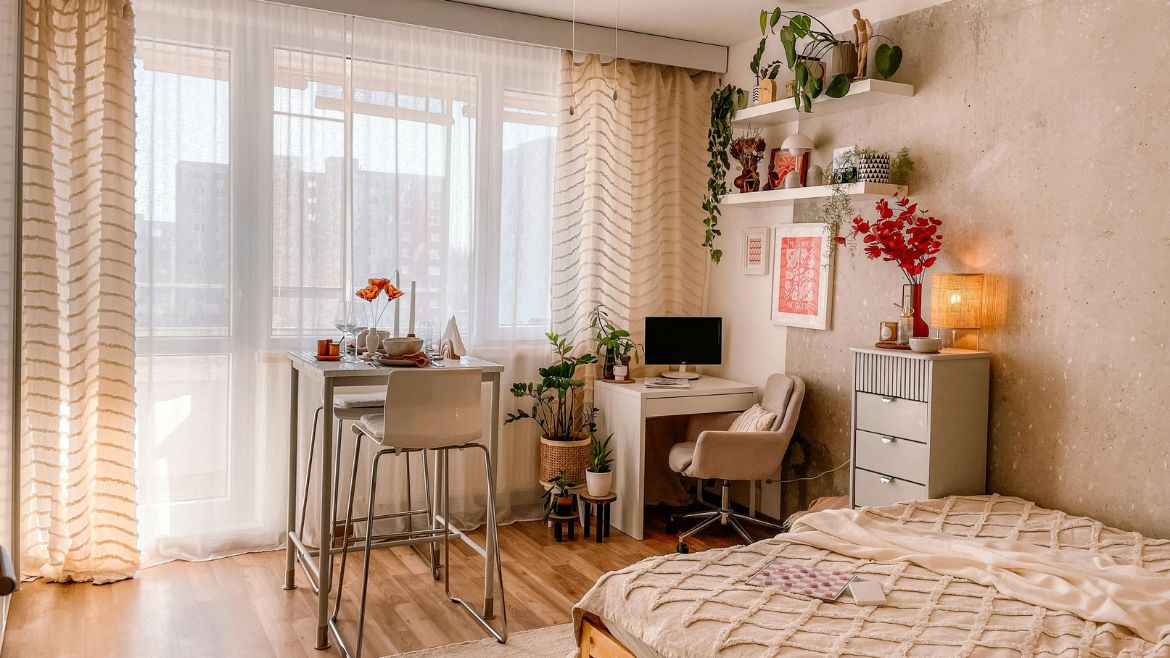
23. Create Distinct Zones Even in a Tiny Room
A small bedroom doesn't have to be just a place to sleep.
Even in a very small space, you can create distinct zones, a sleep area, a small workspace, a reading corner, that make the room feel more functional and more personal.
The key is keeping each zone intentional and contained. A small desk in one corner, a comfortable chair with a floor lamp in another, the bed styled as a proper focal point in the center.
Each zone serves a purpose. Each one earns its place.
24. Use Wall Art as a Focal Point
Art gives a room its personality, and in a small bedroom where floor space is limited, the walls are where that personality lives.
One larger piece above the bed tends to work better than a cluster of small frames, which can feel busy in a tight space. Choose something that sets the tone for the whole room, the color, the mood, the feeling you want to walk into at the end of the day.
25. Let Your Storage Become Part of Your Decor
Open shelving, a well-organized bookshelf, a clothes rack with intentionally displayed pieces, storage doesn't have to be hidden to look good.
In a small bedroom especially, storage that doubles as decor is one of the most space-efficient approaches available.
A bookshelf that holds books, a camera collection, seasonal decor, and a few personal objects isn't clutter. It's a curated display that happens to also be functional. The difference is intention.
How to Apply This in Your Home
If you're renting: Focus on the non-permanent changes first, lighting, bedding, curtains, mirrors, and decluttering. All of these require zero wall damage and make an immediate visual difference.
Wall-mounted shelves using removable adhesive strips are a renter-friendly option for adding surface space beside the bed.
If you're renovating: Prioritize built-in storage around the bed and floor-to-ceiling wardrobes.
These are the two changes that have the most lasting impact in a small bedroom, and the ones that add the most value to the room long-term.
If you're on a budget: Start with the IKEA PAX wardrobe system, under-bed storage, and ceiling-to-floor curtains.
These three changes alone address storage, visual height, and organization, and none of them require significant investment.
If you want a high-end result: Invest in a custom bed frame with integrated storage, built-in shelving around the bed, and quality linen bedding.
These are the elements that make a small bedroom look designed rather than decorated.
Common Mistakes
- Buying furniture that's too small. It feels logical to scale everything down in a small bedroom. But a room full of tiny pieces reads as cluttered. One or two larger, intentional pieces will always feel more spacious than a collection of small ones.
- Using overhead lighting only. A single overhead light makes any room feel flat. In a small bedroom it makes it feel institutional. Layer warm light from multiple sources at different heights.
- Ignoring vertical space. Most people design to eye level and stop. The space above, the wall above the bed, the area above the wardrobe, the ceiling, is where small bedrooms gain the most without using any floor space.
- Decorating before decluttering. New furniture and decor layered over existing clutter doesn't solve the problem. It makes it more expensive. Clear the room before you design it.
- Two competing focal points. A statement headboard AND a gallery wall AND a large mirror on the same wall is too much. Pick one loud moment. Let everything else support it quietly.
Final Thoughts
A small bedroom done well isn't a consolation prize. It's a room where every decision was intentional, where nothing is there by accident and everything earns its place.
That kind of deliberateness is harder to achieve in a large room, where you can hide mistakes behind square footage. In a small bedroom, the editing is the design. Get that right and the size becomes irrelevant.